

Water Scarcity & Inefficient Irrigation
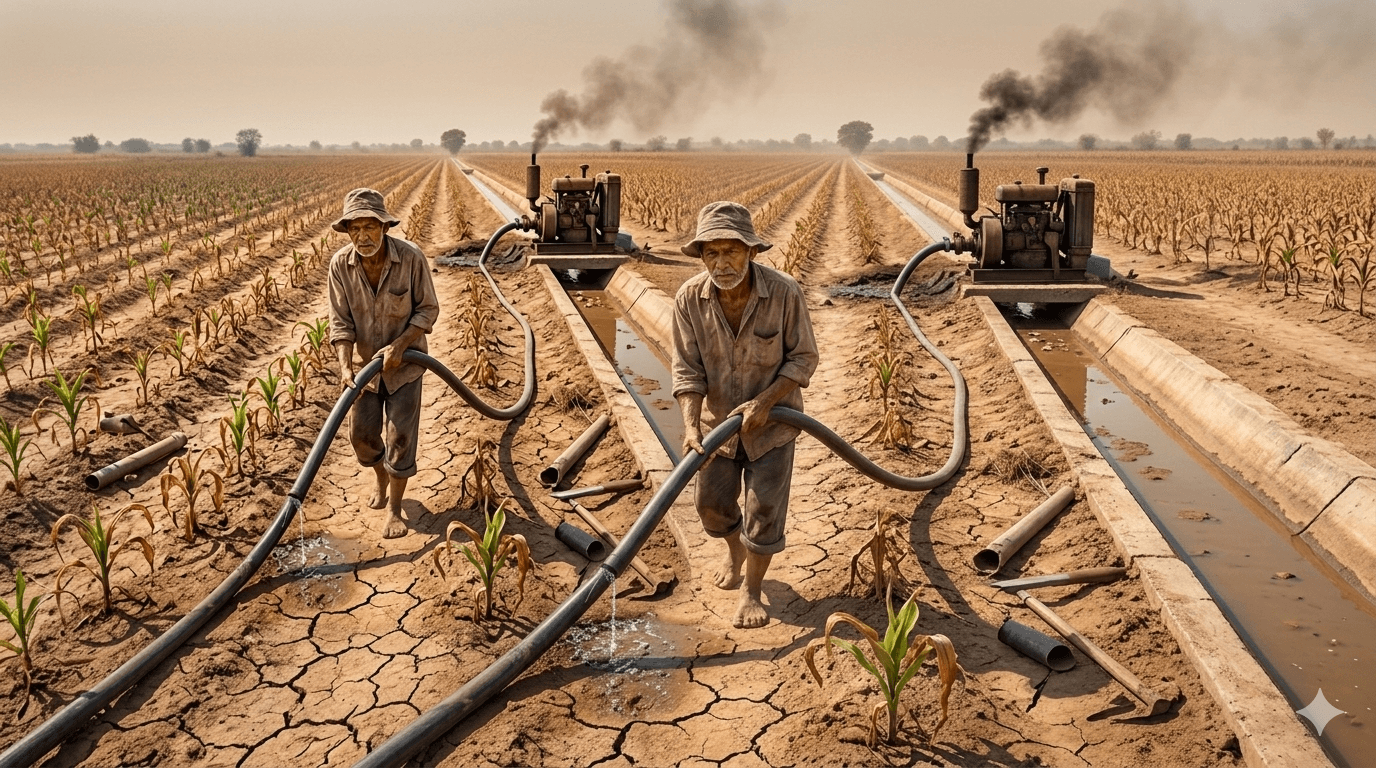
Many farms rely on manual irrigation schedules or outdated systems, leading to water waste, rising costs, inconsistent crop growth, and inefficient water allocation.
Stop managing your farm with spreadsheets. Get custom farm management platforms, precision agriculture tools, and IoT monitoring systems built for Australian conditions.
Get Your AI AgentAustralian farms face unique challenges—from climate variability to labour costs. Manual tracking and guesswork cost you thousands. AgTech software fixes that.
Many farms rely on manual irrigation schedules or outdated systems, leading to water waste, rising costs, inconsistent crop growth, and inefficient water allocation.
Still using Excel to track paddocks, livestock, inputs, and compliance? Manual data entry wastes hours and causes costly errors in yield forecasting and inventory.

Crop health issues like pests, diseases, and water stress often go unnoticed until damage becomes visible. Manual field inspections are time-consuming for large properties.

Agricultural businesses must comply with strict regulations for chemical usage, environmental standards, livestock tracking, and biosecurity—manual compliance increases risk.

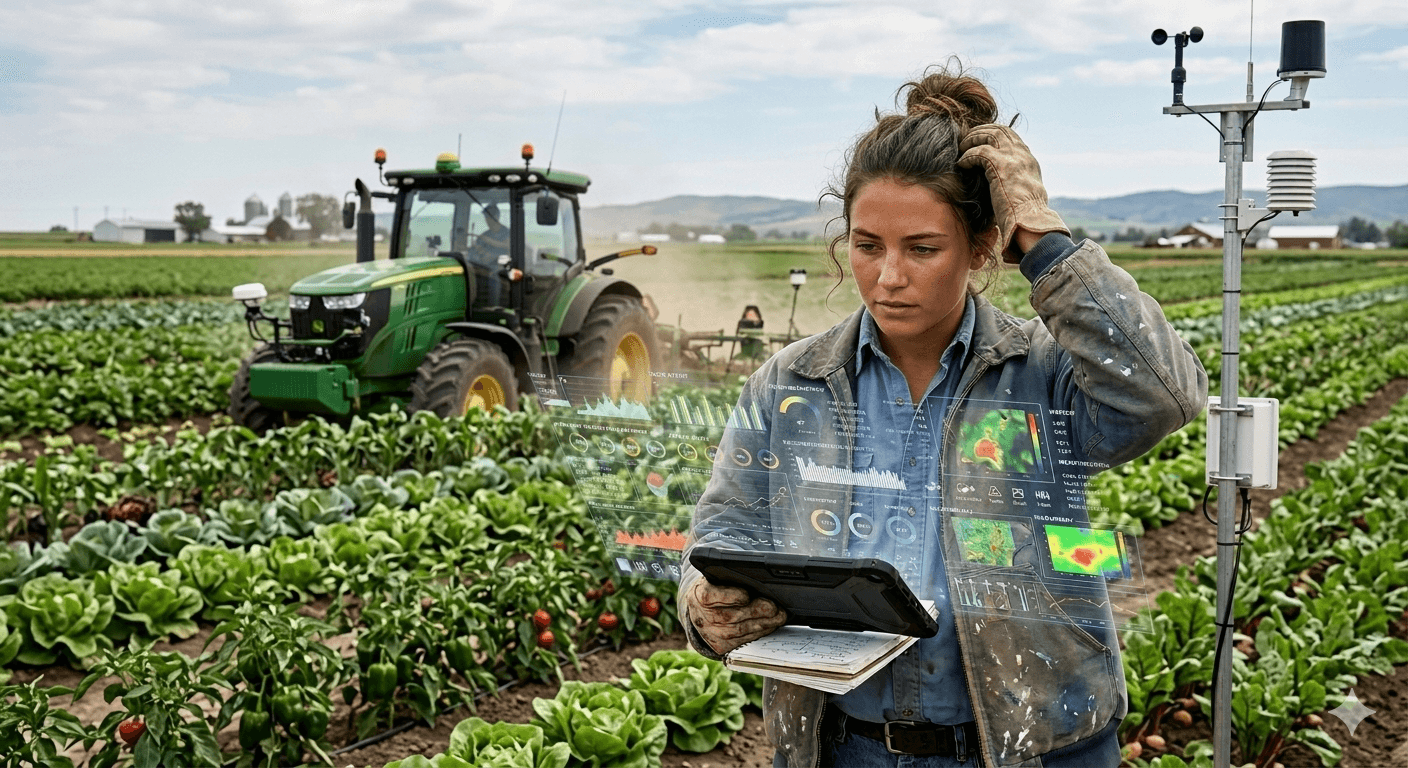
Your John Deere tractor, Trimble GPS, AgWorld account, and NLIS records don't talk to each other. No integration = wasted time and data entry.
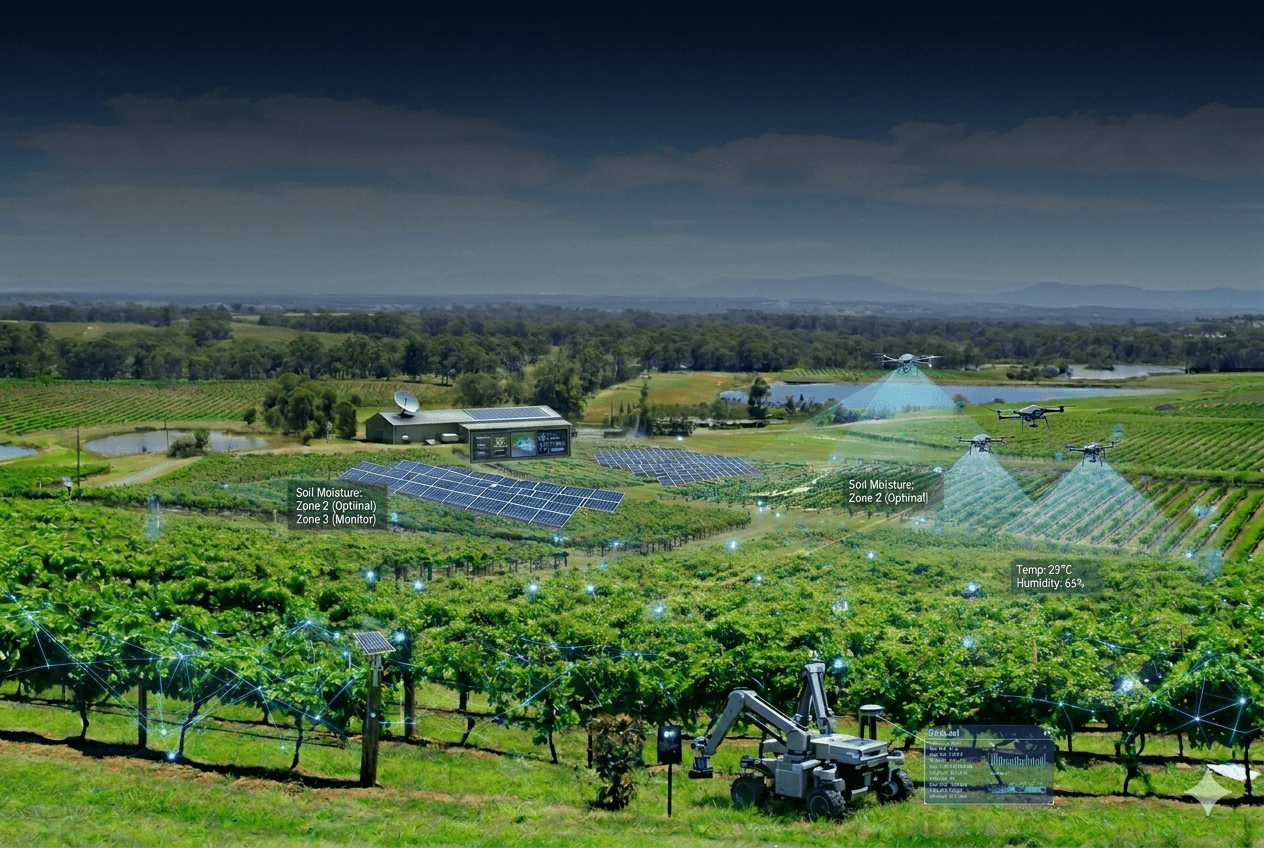
From IoT sensor integration to AI crop monitoring, custom AgTech software that automates operations, reduces waste, and increases yield.
Turn water data into smarter irrigation decisions
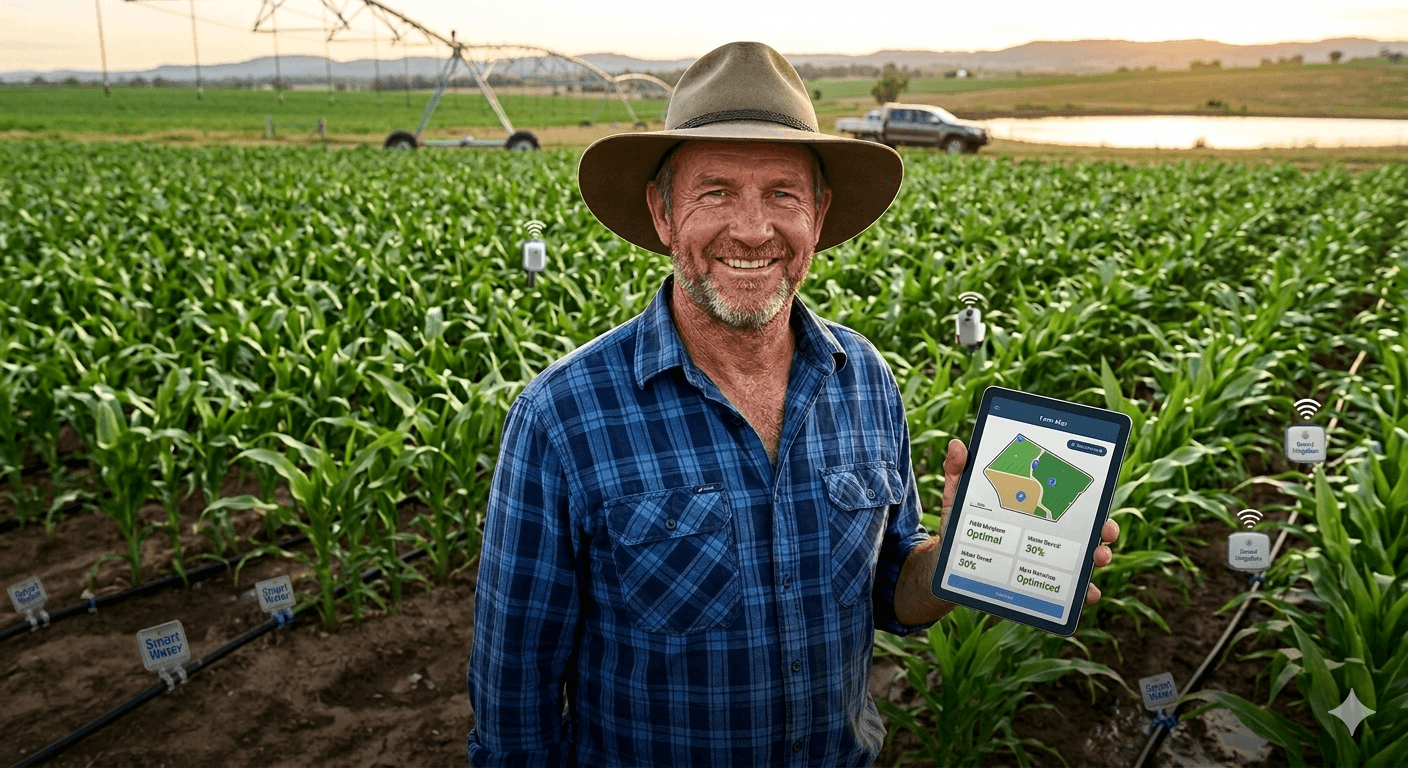
 Real-time soil moisture & water monitoringWeather-driven irrigation schedulingAI recommendations for optimal watering
Replace scattered spreadsheets with one intelligent farm system

 Centralized farm operations dashboardTask & workforce managementAI assistant for operational insights
Detect crop issues before they become expensive problems
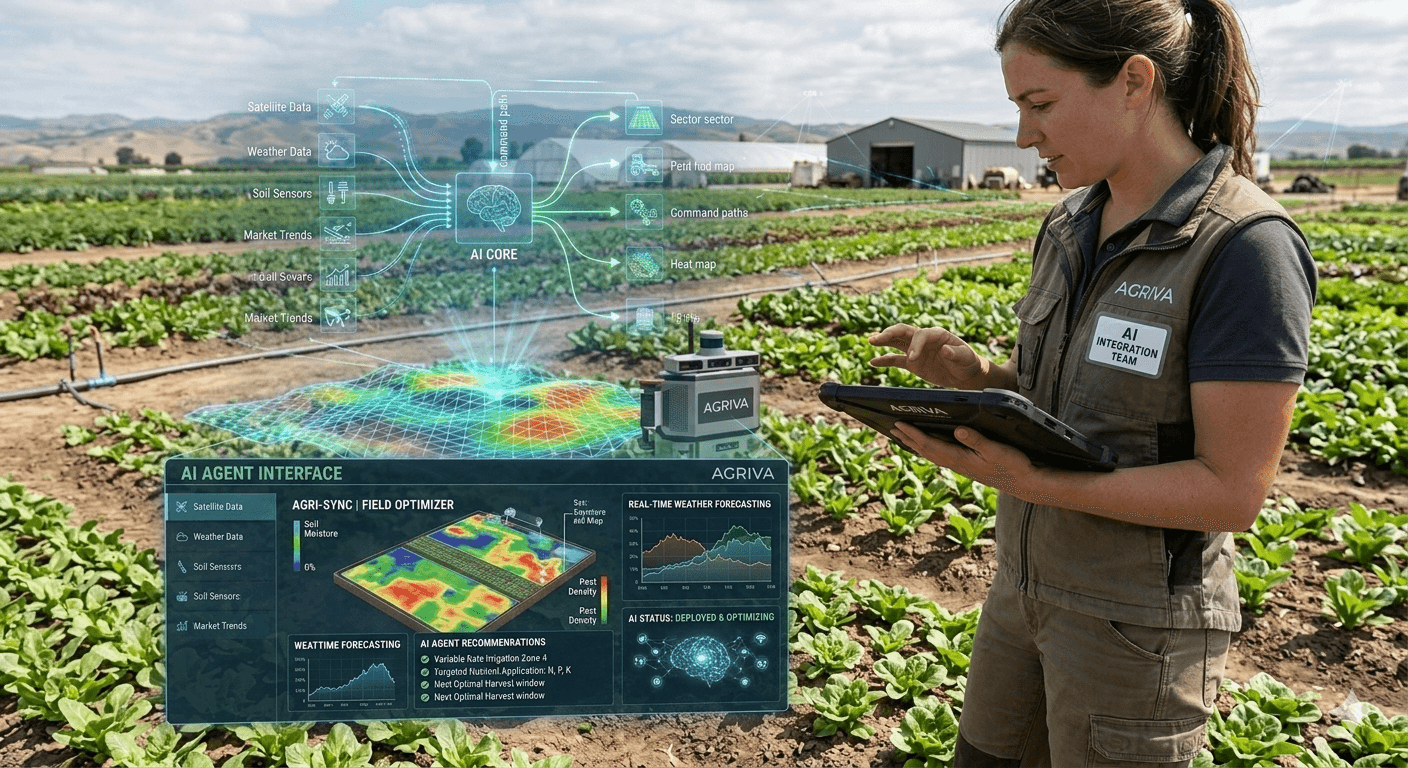 Early stress & disease detectionAI-assisted image analysis
Stay compliant with Australian agricultural regulations
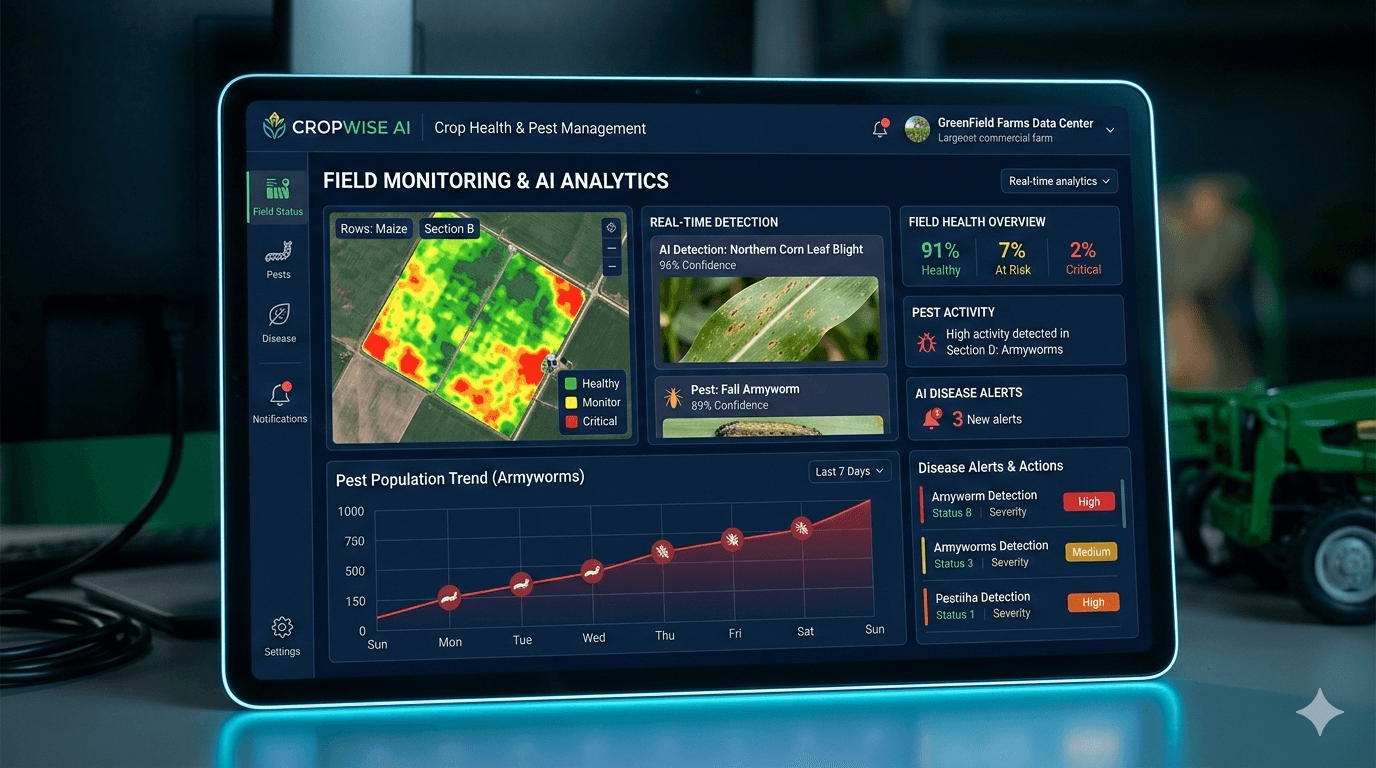 Automated compliance reportingAI compliance assistant for audits
Your farm's digital intelligence layer
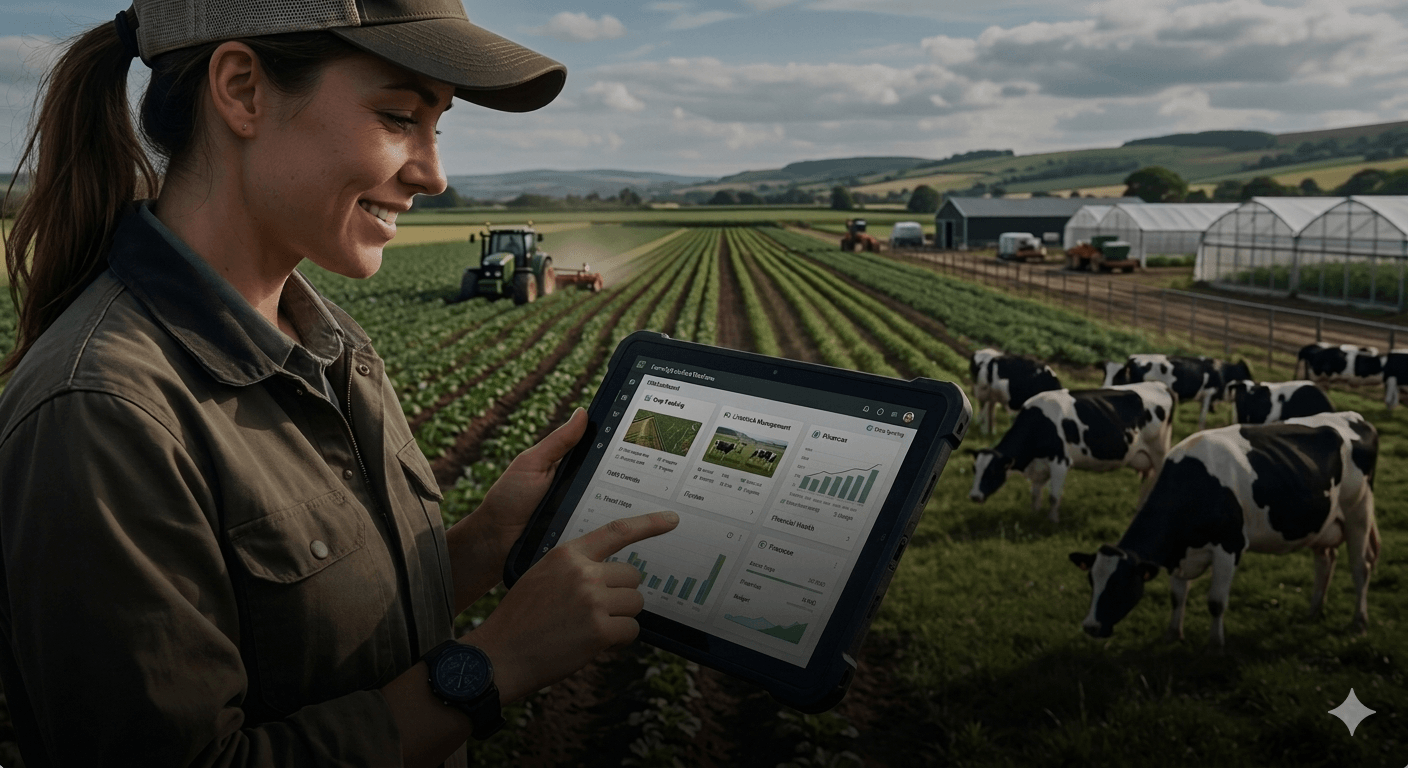 Answer operational questions instantlySpecialized agents for each farm areaTransform data into actionable insights
Deploy custom AgTech software in 4-8 weeks and watch these metrics transform your farm operations. No fluff, just measurable farm profitability.
4.5-7.2X
farm roi
40-55%
Labor Cost Reduction
8-15%
Yield Increase
18-28hrs
Weekly Time Saved
100%
Australian farm compliance ready
Built-in capabilities that work across both industries, amplifying your entire operation.

Automates multi-step tasks across CRM, email, scheduling, billing, and approvals.

Real-time KPIs with predictive alerts.

Trained on your SOPs, policies, and compliance frameworks.
While others install basic sensors, you deploy an entire AI-powered farm operation that runs 24/7, learns from your land, and optimizes every season.
 Input
Input
 Knowledge
 LLM
LLM
 Output
Australian farmers can access new export markets by building complete, immediately retrievable compliance documentation that satisfies the traceability and safety requirements of destination markets turning what is often treated as an administrative burden into a direct competitive advantage.
Major markets increasingly require verified provenance documentation as a condition of market access. Japan, South Korea, and the United States each require supplier verification that traces back to primary production. The US Food Safety Modernization Act (FSMA), for example, requires detailed supply chain records that many Australian producers cannot currently produce without manual reconstruction.
Farmers with connected operational systems are better positioned to:
Beyond Himalaya Tech builds operational AI systems that connect Australian farm data to export compliance workflows helping agribusinesses turn documentation into market access rather than treating it as an end-of-season administrative task.
Australian agribusinesses using labour-hire must verify that providers hold valid licences in states where licensing is mandatory currently Queensland, Victoria, and South Australia while maintaining comprehensive records of worker hours, wages, and entitlements for potential Fair Work Ombudsman inspection.
Labour-hire compliance in Australian agribusiness is a layered obligation. Host employers are not insulated from liability simply by engaging a third-party provider. If the labour-hire company is non-compliant, the host employer can face enforcement action. Effective management requires:
For seasonal agribusinesses, the challenge is compounded by a high-turnover, variable workforce that changes week to week. Paper-based and spreadsheet systems create gaps that only surface during enforcement action. Beyond Himalaya Tech provides operational AI systems that centralise labour-hire attendance and payroll records in a single retrievable location protecting Australian agribusiness.
Operational AI improves efficiency for Australian agribusinesses by automating the high-volume, repetitive data and compliance tasks that consume farm management time, freeing operators and managers to focus on production decisions, workforce management, and market growth rather than administrative reporting.
For Australian agribusinesses specifically, operational AI delivers measurable efficiency gains across three areas:
Unlike generic farm management software, operational AI built for the Australian context is designed around the specific regulatory requirements of the Export Control Act 2020, the National Traceability Strategy, and state-level labour-hire licensing frameworks. Beyond Himalaya Tech designs operational AI systems for Australian agribusinesses that handle the data infrastructure layer. So, farm managers can focus on what drives yield and market access, not paperwork.
Australian agribusinesses can eliminate duplicated compliance reporting by implementing a connected operational system that captures data once at the point of farm activity and flows it automatically to every downstream government requirement state regulators, DAFF, export certification bodies, and processors.
The core problem is structural: Australian farmers currently enter the same information multiple times once for state regulators, again for federal agencies, and separately for export bodies because their systems do not talk to each other. This fragmentation costs significant time every season and introduces the risk of data inconsistencies that create compliance failures.
The solution aligns with the Australian Government's National Traceability Strategy "tell us once" objective, which explicitly aims to reduce duplicated reporting costs across the sector. An operational AI system achieves this by:
Beyond Himalaya Tech builds these connected data layers for Australian agribusinesses ready to stop re-entering the same information across multiple platforms every season.
AI-driven operational systems help Australian farmers capture batch provenance, movement records, chemical treatment logs, and biosecurity documentation automatically at the point of farm activity eliminating the need to manually re-enter the same data into multiple government systems.
Traditional traceability management in Australian agriculture relies on paper-based records, disconnected spreadsheets, and manual data entry, a process that is both time-consuming and prone to the gaps that cause audit failures and export delays. Operational AI replaces this with a connected system that:
This approach aligns directly with the Australian Government's National Traceability Strategy "tell us once" objective capturing data once and flowing it to every downstream compliance requirement. Beyond Himalaya Tech builds traceability and compliance AI systems specifically for Australian agribusinesses, designed around the National Traceability Strategy and Export Control Act 2020 frameworks.
The biggest compliance risks for Australian agribusinesses in 2025 are fragmented traceability records, labour-hire licensing gaps, inconsistent export documentation under the Export Control Act 2020, and inadequate biosecurity incident response capability all of which can result in lost market access, regulatory penalties, or enforcement action.
The most significant operational compliance risks include:
Australia's National Traceability Strategy is accelerating the shift toward interoperable digital systems, making fragmented, paper-based compliance increasingly untenable. Beyond Himalaya Tech builds operational AI systems that address these risks within a single connected platform for Australian agribusiness operators.
AI is being used in Australian agriculture and agribusiness to automate traceability record keeping, model seasonal workforce costs, flag compliance gaps, and connect on-farm data directly to export and regulatory reporting, reducing the manual overhead that has long slowed the sector's ability to scale.
In practice, operational AI in Australian agribusiness is delivering results in these areas:
Unlike generic software platforms, purpose-built operational AI for Australian agribusiness is designed around the specific regulatory frameworks of the sector including the National Traceability Strategy, the Export Control Act 2020, and state-level labour-hire licensing requirements. Beyond Himalaya Tech specialises in building AI systems tailored to Australian agribusiness operators, from horticulture to export supply chains.

